Retaining Wall Drainage in Lower Hutt
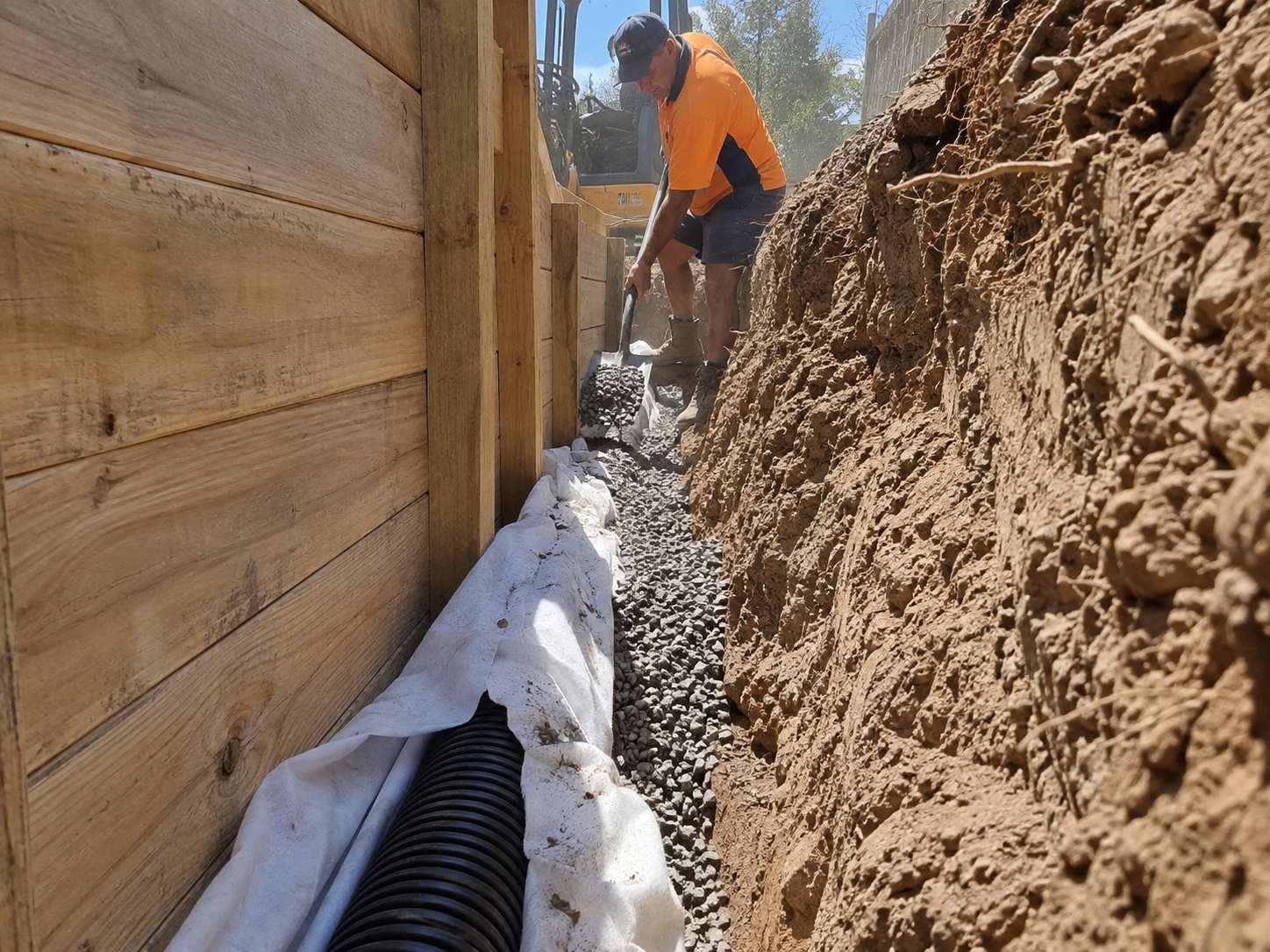
Top Retaining Walls Lower Hutt installs and retrofits drainage behind retaining walls. A slotted pipe bedded at the base, free draining metal up the back of the wall, geotextile separating that from the soil, and an outlet that actually discharges somewhere. On existing walls we can often retrofit the lot without taking the wall down.
- The single most common cause of wall failure
- Slotted pipe, drainage metal, geotextile and a real outlet
- About $84 to $210 per metre installed
- Retrofitted behind existing walls where access allows
Get your free quote
Four quick questions. Most quotes come back within a couple of days.
This page exists because drainage is the answer to the question everybody asks after a wall fails. Retaining wall failures are overwhelmingly caused by water building up behind the wall rather than by the structure being undersized for the soil load alone. A wall can look perfect from the front, with sound posts and tidy timber, while the drainage behind it has quietly silted up over ten years.
Why water, not soil, is what breaks retaining walls
Saturated ground weighs and pushes more
Wet soil is heavier than dry soil, and once water fills the voids it adds hydrostatic pressure on top of the earth pressure. A wall designed for drained conditions can face roughly double the load once the backfill is saturated. Nothing about the wall changed. The water did.
Hutt ground makes it worse
western hills colluvium holds a near vertical face while dry, which is exactly why homeowners assume it is stable. Wet, it behaves very differently. MBIE's the Hutt Valley guidance notes that provided adequate drainage provisions are made, it may be assumed there will be no water pressure acting against the wall. The whole design rests on the drainage working.
Wet and dry cycling
the Hutt Valley gets real frosts and long dry spells. Clay rich soils swell and shrink through that cycle, which works joints open and gradually breaks up the drainage path behind a wall.
What proper retaining wall drainage actually is
The pipe
A slotted or perforated pipe bedded at the base of the wall on a fall, with the slots facing down so silt does not settle straight into them. It has to run to an outlet with somewhere to go: a stormwater connection, a soak pit, or daylight at a lower point.
The drainage metal
Free draining aggregate filling the zone behind the wall so water can reach the pipe instead of ponding. Not builders mix, and not the spoil that came out of the hole.
The geotextile
Filter fabric between the drainage metal and the backfill soil. Without it, silt washes into the aggregate over a few years and the whole drain becomes a solid block of mud. This is the layer most often left out and it is the cheapest one.
Weep holes and outlets
On block and concrete walls, weep holes through the face give water a second escape route. On any wall, an outlet that dead ends is not an outlet.
Retrofitting drainage behind an existing retaining wall
If a wall is structurally sound but wet behind, we can often excavate a narrow trench along the back, install pipe, metal and geotextile, and backfill without dismantling anything. It costs a fraction of a rebuild and it usually stops the movement.
Access decides whether it is possible. Where there is a fence, a shed or a neighbour's garden immediately behind the wall, it may not be, and then the honest answer is that the fix comes with the next rebuild. Drainage retrofit runs about $84 to $210 per metre where it can be done.
Retaining Wall Drainage at a glance
- Pipe
- Slotted or perforated, bedded on a fall, slots down
- Aggregate
- Free draining metal, not builders mix or site spoil
- Filter
- Geotextile between the aggregate and the backfill soil
- Outlets
- Stormwater, soak pit or daylight, plus weep holes on solid walls
- Cost
- About $84 to $210 per metre installed
- Retrofit
- Possible on sound walls where there is access behind
- Why it matters
- Saturated backfill can roughly double the load on a wall
Retaining Wall Drainage in Lower Hutt: common questions
Can drainage be added to a wall that is already built?
Often yes, by trenching along the back and installing pipe, metal and geotextile. It depends on access behind the wall.
What is the geotextile for?
It stops silt washing into the drainage aggregate. Without it the drain clogs within a few years and the wall starts carrying water pressure it was never designed for.
Do low walls need drainage?
Yes. A lower wall carries less load but the water behaves the same way, and almost every failed low wall we replace had no working drainage.
Where does the water go?
To stormwater, a soak pit, or daylight at a lower point. A drain that stops in the ground is not doing anything.
How do I tell if the drainage behind my wall has failed?
Water seeping through the face or through the joints, ground behind the wall staying saturated long after rain has stopped, moss or algae growing on the face, and any new bulge in the middle of a run whose ends are still straight. None of it is visible until it is fairly advanced, which is why the first symptom for most people is movement.
What is a weep hole and do I need them?
A weep hole is a small opening through the face of a solid wall that gives water a second escape route if the main drain is overwhelmed or partly blocked. On block and concrete walls they are cheap insurance and we fit them as standard. They do not replace the pipe and the drainage metal behind the wall, they back it up.
Can drainage be added to a wall on a boundary?
It depends on what is immediately behind the wall. Where there is a metre or so to trench into, yes. Where the neighbour's fence, shed or garden sits right against it, often not, and the honest answer is that the fix comes with the next rebuild. We tell you which one you have at the site visit rather than after starting.
How much water can build up behind a retaining wall?
Enough to roughly double the load the wall was designed for. Saturated soil is heavier than dry soil, and once water fills the voids it adds hydrostatic pressure on top of the earth pressure. Nothing about the structure changed. That is why the guidance for the Hutt Valley allows the designer to assume no water pressure only where adequate drainage is provided.
Recent Lower Hutt jobs
Boundary wall between us and the neighbour on a new build. Sorted the levels, the consent question and the fence on top in one job. Turned up when they said and left the site clean every night.
Builder here. I use them on infill work because the paperwork comes back complete. PS1 up front, PS4 at the end, no chasing.
Wall failed after the big rain and took part of the bank with it. Made safe within two days and rebuilt a month later with real drainage behind it.
Terraced the back lawn into two levels. Fast, tidy, fair price, and the drainage was done properly.
Get a price for retaining wall drainage in Lower Hutt
Free site visit, a fixed written quote, and a straight answer on what the wall actually needs.
Start your quote
Four questions and you are done.