Timber Retaining Walls in Lower Hutt
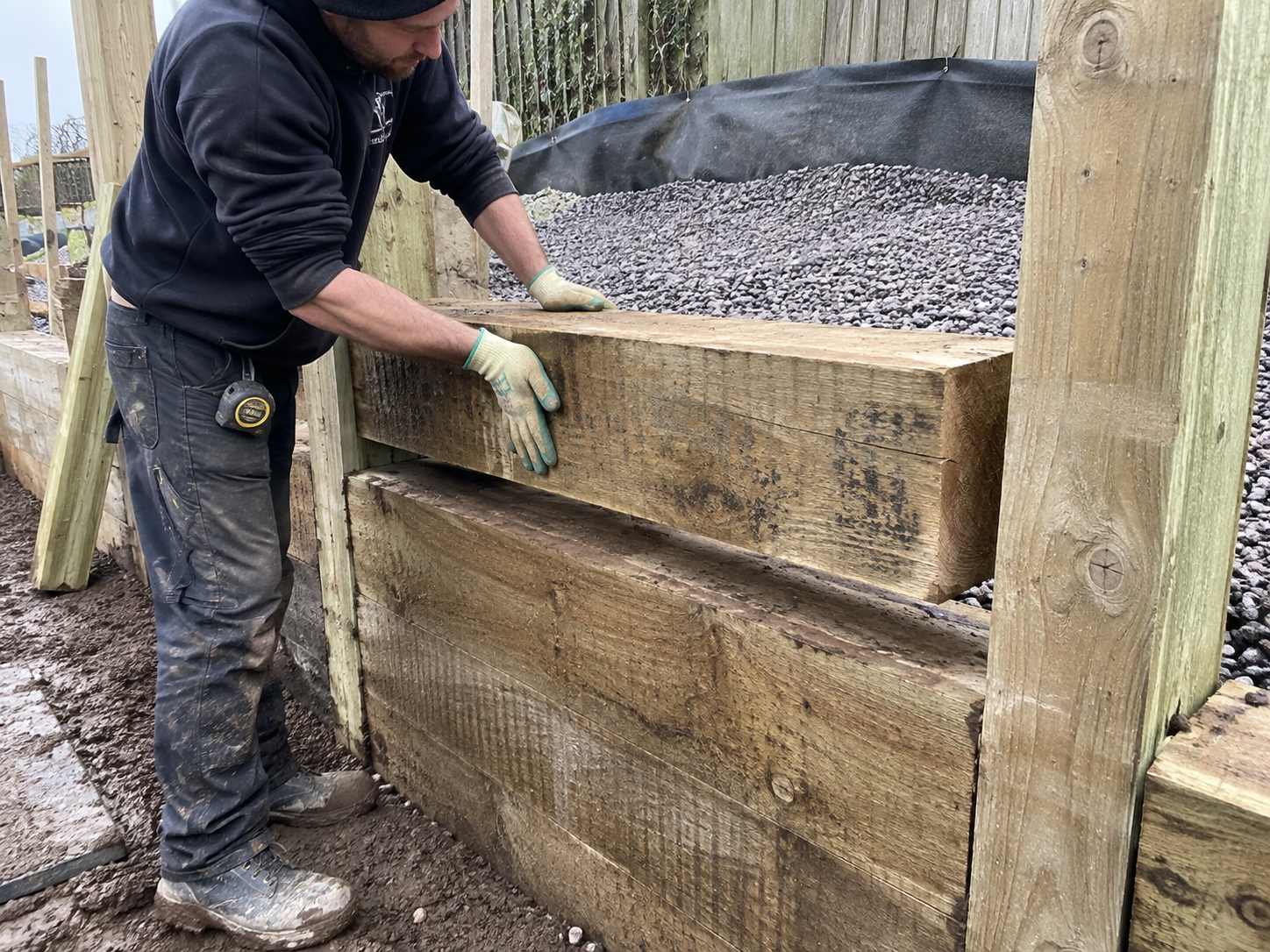
Top Retaining Walls Lower Hutt builds timber retaining walls across the city, from a single course along a garden edge to full boundary walls on new subdivision lots. Treated posts set in concrete, sleepers dropped between them, drainage metal and a slotted pipe behind, geotextile over the top, and backfill compacted in layers rather than tipped in and hoped for.
- H5 treated posts set in concrete, H4 sleepers
- Drainage and geotextile on every wall we build
- About $400 to $800 per square metre of wall face
- Exempt from consent to 1.5m with no surcharge
Get your free quote
Four quick questions. Most quotes come back within a couple of days.
Timber is the most common residential retaining wall in the Hutt Valley and the cheapest way to hold a bank properly. It is also the type we get called out to replace most often, almost always for the same two reasons: posts that were not treated to the right level for ground contact, and drainage that was never installed. Both are cheap to get right on the day and expensive to fix in eight years.
Building a timber retaining wall that lasts thirty years
The visible part of a timber wall is the easy part. Everything that decides its life expectancy is buried.
H5 posts, not H4
Anything in ground contact has to be H5 treated. H4 is rated for above ground use and it rots at the ground line, which is exactly where the bending load on a retaining post is highest. That single substitution is behind a large share of the failed walls we pull out.
Embedment and spacing
As a rule of thumb the post goes into the ground about the same depth as the height it retains, in a concrete surround, with spacing set by the sleeper span and the load. On a 1.2 metre wall that means a real hole, not a fence post hole.
Drainage behind, every time
A slotted pipe at the base, drainage metal up the back of the wall, and geotextile between that and the backfill so silt cannot migrate in and choke it. Then an outlet that actually goes somewhere. A drain that dead ends is decoration.
Backfill in layers
Compacted in lifts as the wall goes up, not bulldozed in at the end. Loose fill settles, which drops the ground behind the wall and lets water pond exactly where you do not want it.
Timber retaining wall cost in Lower Hutt, and what moves it
Timber pole and sleeper walls run roughly $400 to $800 per square metre of wall face, or about $160 to $420 per lineal metre for a low wall. A 10 metre wall at 1.2 metres is 12 square metres, so most of those land between $5,000 and $9,000 built properly.
Access moves it more than anything else. A flat Kelson or Waterloo section a truck can back onto is straightforward. A Maungaraki section where every post, every bag of concrete and every cubic metre of drainage metal goes up by barrow is a different job at the same height.
When timber is the wrong retaining wall for the job
We will say so rather than take the easy sale. Timber is not the answer above about 1.5 metres, where block or concrete is both stronger and better value over its life. It is not the answer where a driveway or a building sits above the wall, because that surcharge needs a designed structure. And it is not the answer where the base of the wall sits permanently wet, because even H5 has a limit.
MBIE's post earthquake review also noted that retained fill settled significantly behind flexible timber pole walls. If what is behind the wall matters, that flexibility is a real consideration rather than a technicality.
Timber Retaining Walls at a glance
- Posts
- H5 treated, concreted in, depth matched to retained height
- Sleepers
- H4 treated, spanning between posts
- Drainage
- Slotted pipe, drainage metal and geotextile, with a real outlet
- Backfill
- Compacted in layers as the wall goes up
- Cost
- About $400 to $800 per square metre of wall face
- Practical height
- Up to about 1.5m, beyond that block or concrete
- Consent
- Exempt to 1.5m retained ground with no surcharge
Timber Retaining Walls in Lower Hutt: common questions
How long does a timber retaining wall last?
Built with H5 posts and working drainage, thirty years is realistic. Built with H4 posts and no drainage, five to ten. The difference in build cost is small.
How high can a timber wall go?
To about 1.5 metres without specific engineering. Above that, or with any surcharge, it needs designing and consenting, and usually a different wall type makes more sense.
Can you match an existing timber wall?
Usually. Sleeper sizes and post spacings are fairly standard, and new treated pine weathers to a similar grey within a couple of years.
Do I need drainage on a low wall?
Yes. Height reduces the load, it does not remove the water. Almost every failed low wall we replace had no working drainage behind it.
What is the difference between H4 and H5 timber?
H5 is the treatment level rated for permanent ground contact. H4 is rated for exterior use above ground. On a retaining wall the post is buried, and the ground line is exactly where the bending load is highest, so an H4 post rots through at the worst possible point. It is the single most common reason we are replacing timber walls built in the 1980s and 1990s.
How deep do retaining wall posts go?
As a working rule the post goes into the ground about the same depth as the height it retains, in a concrete surround sized for the load. A 1.2 metre wall therefore needs a real hole rather than a fence post hole. Spacing between posts is set by the sleeper span and the retained height rather than by preference.
Can a timber retaining wall have a fence on top?
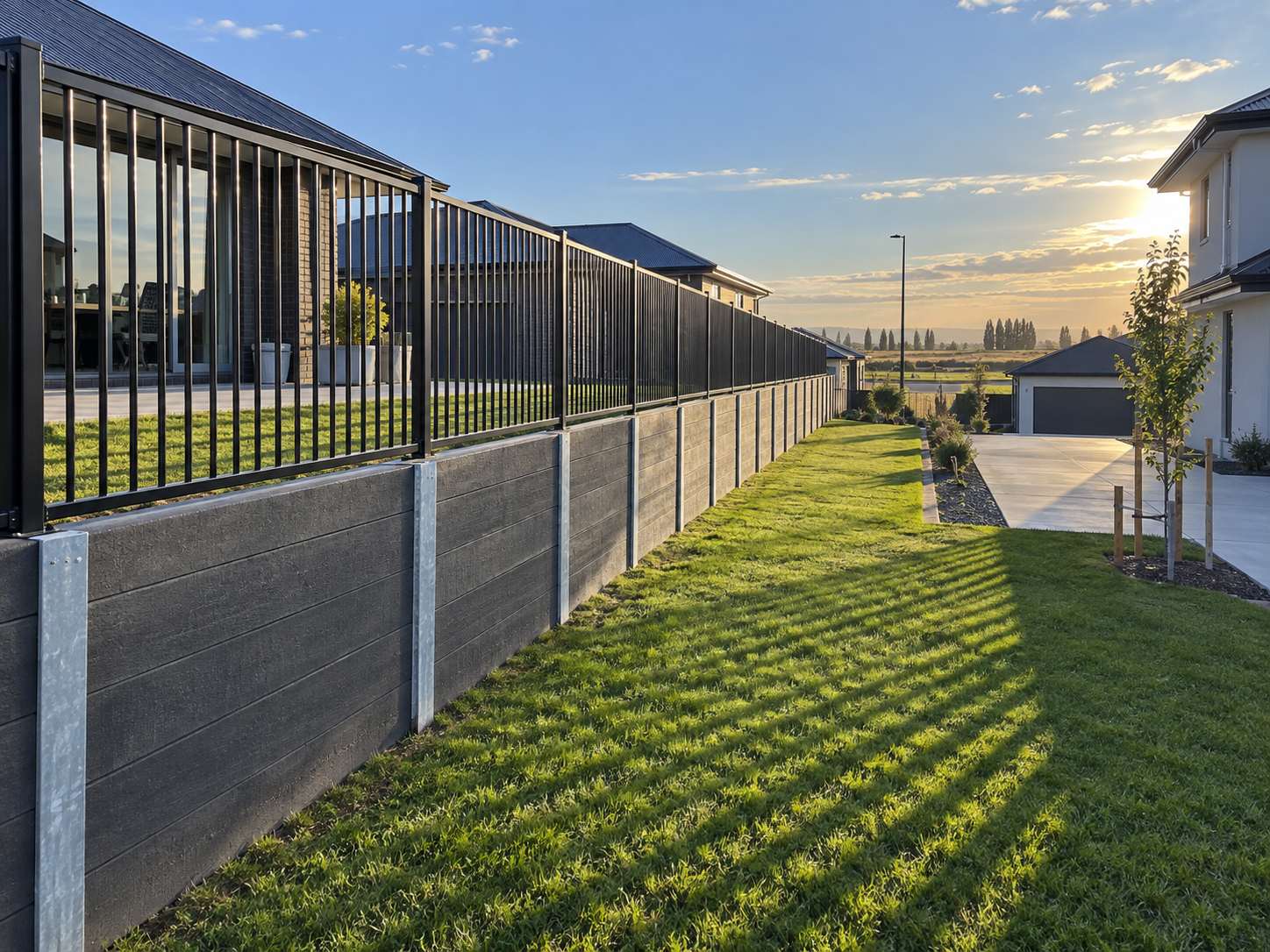
Yes, and it is best designed in from the start so the posts run through rather than being bolted to a finished wall. A fence adds wind load at the top of the wall, which is a real design consideration on an exposed site, and it can also affect whether the combined structure still sits inside the consent exemption.
Will new treated timber match my existing wall?
Not on day one. Fresh H4 sleepers are noticeably greener than weathered timber, and they take roughly two years to grey off to a similar tone. Sleeper sizes and post spacings are fairly standard, so the profile usually matches even when the colour has not caught up yet.
Recent Lower Hutt jobs
Boundary wall between us and the neighbour on a new build. Sorted the levels, the consent question and the fence on top in one job. Turned up when they said and left the site clean every night.
Builder here. I use them on infill work because the paperwork comes back complete. PS1 up front, PS4 at the end, no chasing.
Wall failed after the big rain and took part of the bank with it. Made safe within two days and rebuilt a month later with real drainage behind it.
Terraced the back lawn into two levels. Fast, tidy, fair price, and the drainage was done properly.
Get a price for timber retaining walls in Lower Hutt
Free site visit, a fixed written quote, and a straight answer on what the wall actually needs.
Start your quote
Four questions and you are done.