Gabion Retaining Walls in Lower Hutt
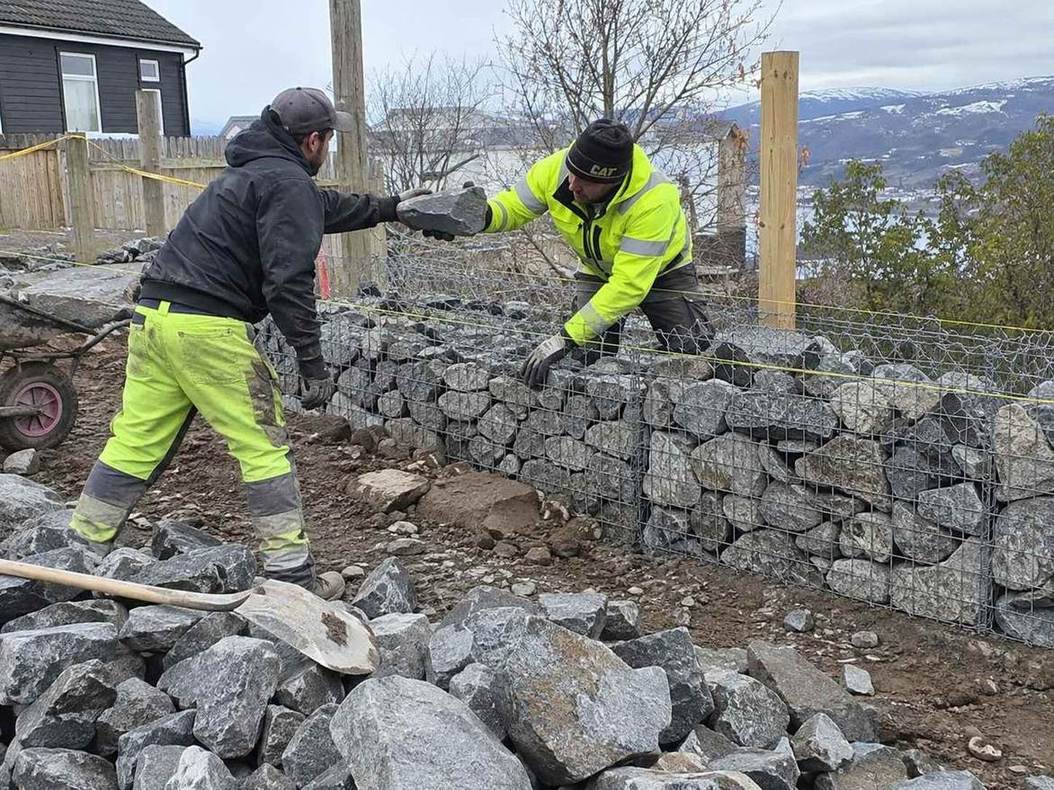
Top Retaining Walls Lower Hutt builds gabion retaining walls, which are galvanised wire baskets filled with rock and stacked in courses. We prepare and key the base, tie the baskets at every seam, hand pack the visible face so it reads as a stone wall rather than a rubble pile, and machine fill the rest.
- Drain freely, so no water builds up behind them
- Flex rather than crack, which suits a seismic zone
- About $500 to $900 per square metre of wall face
- Suit rural boundaries, large banks and erosion control
Get your free quote
Four quick questions. Most quotes come back within a couple of days.
Gabions solve the problem that kills most other retaining walls, which is water. A gabion wall is porous all the way through, so water passes out through the face instead of building up behind it and pushing. They also deform without failing, which is why they are well regarded in seismic areas. The trade off is that they are chunky, and they look like what they are.
Where a gabion retaining wall is the right answer in the Hutt Valley
Wet ground and spring lines
If the bank behind the wall is permanently damp, a solid wall is fighting the water and a gabion wall simply lets it through. In those conditions gabions outlast everything else.
Long rural and lifestyle boundaries
On a lifestyle block out toward Wainuiomata or the Wainuiomata valley, where the wall is long and the look is meant to be rugged, gabions cost less per metre than an equivalent engineered concrete wall and read correctly in that setting.
Erosion control and watercourses
Along a stream edge or the toe of a bank, a gabion structure is flexible enough to settle with the ground rather than crack, and rough enough to slow water at the face.
Building gabion walls properly: rock, mesh and hand packed faces
They look simple and that is exactly what gets them built badly.
The rock has to be angular and correctly graded so it locks together and cannot sieve out through the mesh. The face needs hand packing, which is slow and is the difference between a wall that looks deliberate and one that looks like a slip. Baskets have to be tied to each other properly at every seam rather than just stacked. And the mesh grade and coating matter, because a cheap galvanised basket near the coast at Eastbourne will not last as long as the rock inside it.
Gabion retaining wall cost and life expectancy
Gabion walls run about $500 to $900 per square metre of wall face, or roughly $260 to $575 per lineal metre on a low wall. That puts them between timber and concrete block.
Life expectancy comes down to the wire rather than the stone. A properly specified heavily galvanised or PVC coated basket has a long life, and the wall can be refaced or rebasketed later without touching the rock. Vegetation grows into the face over time, which some people want and some people do not.
Gabion Retaining Walls at a glance
- Structure
- Galvanised wire baskets, tied at every seam, filled with angular rock
- Cost
- About $500 to $900 per square metre of wall face
- Key advantage
- Free draining, so no hydrostatic pressure builds behind it
- Seismic
- Flexes and deforms rather than cracking
- Face
- Hand packed so it reads as stone rather than rubble
- Coastal
- Heavier galvanising or PVC coating near the sea
- Suits
- Wet ground, rural boundaries, erosion control, large banks
Gabion Retaining Walls in Lower Hutt: common questions
Do gabion walls need drainage behind them?
Not in the conventional sense, because the wall itself is the drainage. They still need geotextile behind so soil cannot wash through into the rock.
How long do gabion baskets last?
It depends on the wire, not the rock. Properly specified galvanised or PVC coated baskets last decades. Cheap mesh near the coast does not.
Do they look untidy?
Only if the face is machine filled. Hand packing the visible face is slow and it is what makes the difference.
Can gabions be used in a suburban garden?
They can, and they suit a modern landscape scheme well. They are chunky though, so they take more space than a block wall of the same height.
Are gabion walls strong enough for a house site?
They can be, with engineering. A gabion structure is a gravity wall, so capacity comes from mass and base width rather than from steel, which means it takes real depth at the base. Where there is room for that they perform very well, and their ability to deform without failing is why they are well regarded in a seismic zone.
What rock goes in a gabion basket?
Angular, correctly graded and larger than the mesh aperture so it cannot sieve out. Rounded river stone looks appealing and locks together far less well. The visible face is hand packed, which is slow and is the entire difference between a wall that looks deliberate and one that looks like a slip.
Will plants grow through a gabion wall?
Over time, yes, particularly on a damp face. Some people want that and plant it deliberately, others do not. If you would rather it stayed clean, the face can be kept clear, and geotextile behind the baskets stops soil migrating into the rock, which is what feeds the growth in the first place.
Do gabion walls rust?
The wire is the limiting component rather than the rock. Properly specified heavily galvanised or PVC coated mesh lasts decades. Cheap mesh near the sea at Eastbourne will not, and the wall can be rebasketed later without disturbing the stone if it comes to that.
Recent Lower Hutt jobs
Boundary wall between us and the neighbour on a new build. Sorted the levels, the consent question and the fence on top in one job. Turned up when they said and left the site clean every night.
Builder here. I use them on infill work because the paperwork comes back complete. PS1 up front, PS4 at the end, no chasing.
Wall failed after the big rain and took part of the bank with it. Made safe within two days and rebuilt a month later with real drainage behind it.
Terraced the back lawn into two levels. Fast, tidy, fair price, and the drainage was done properly.
Get a price for gabion retaining walls in Lower Hutt
Free site visit, a fixed written quote, and a straight answer on what the wall actually needs.
Start your quote
Four questions and you are done.